Good Classroom Management is Not Easy; It is a Learned and Practiced Skill and Art

Teacher preparation in the United States is in crisis mode. There are not enough new teachers each year to replace teachers who leave the classroom. The cold fact is that four in every ten young teachers leave classroom teaching for other employment in their first five years of teaching. “Multiple reasons rise to the top of the list. Student behavior is a leading complaint Long hears from teachers who contemplate or leave teaching, and one he believes is among the hardest to address. ‘I don’t think anyone has the answer,’ said Long, referring to accounts of extreme student behavior targeting teachers that has resulted in physical or emotional harm.” Zachary Long quit teaching and with his wife co-founded Life After Teaching. He helps teachers who want to quit teaching to quit.

https://www.edweek.org/leadership/behind-the-stats-3-former-teachers-talk-about-why-they-left/2023/04

Student behavior runs teachers out of teaching. It is a fact, but it need not be a continuing fact. When we know teachers quit teaching because of unsuccessful classroom management, we need to aggressively improve how we prepare teachers.

When your boat is taking on water, you can abandon the ship, or you can fix the hole in the hull. We tolerate and accommodate the abandonment of classrooms even though we know a huge “hole” in teacher preparation is classroom management.

A review of teacher preparation curriculum in local colleges of education tells the story. Our local university, for example, provides teacher candidates with 72 credits of college course work toward a major in K-9 education. But there is only one three-credit course that teaches classroom management, and it combines learning theories with student behavior. When we know that an inability to manage children in a classroom setting is one of the leading causes of teacher attrition, is this adequate?

EDUC 340. Supporting Learning and Behavior in the Classroom. 3 Credits.

Course provides pre-service teachers with an understanding of how students learn in educational contexts. Learning theories reviewed, & learning strategies to enhance learning and prevent/manage behaviors are introduced and applied in direct interaction with a learner. Course may be repeated 2 times for a total of 6 credits.
Fall and Spring.

No Longer Is It a Hit Them Hard and Often Response

How to organize and manage groups of students is an age-old problem. The first Normal Schools (state teacher prep schools) endorsed corporal punishment for misbehaving students. Students went to the proverbial woodshed where their teacher administered discipline with a paddle. Teachers taught children to behave by fearing physical punishment. Although some schools began banning corporal punishment as early as 1914 it continued as a disciplinary practice in many states in the late 1990s.

https://www.nea.org/nea-today/all-news-articles/corporal-punishment-schools-still-legal-many-states#:~:text=The%20U.S.%20Department%20of%20Education,dropped%20over%20the%20past%20decade.

When a wooden paddle was considered too harsh, teachers used a gym shoe. I saw the well-known design of a Converse gym shoe on the backsides of my male classmates in the 60s.

On the first day of my first teaching assignment my principal gave me a well-worn wooden paddle and told me to use it. When I asked what a teacher should do if a child’s behavior did not improve, he implied I should hit them harder and more often. I put my paddle in a closet.

Student Discipline as Pedagogy

As often as we talked about paddling back in the day, we clearly understood most of our teachers would never raise a hand to a student. They created patterns of good student behavior through good teaching. It was not a matter of experience, however. We knew veteran teachers whose classrooms were unruly and undisciplined and novice teachers whose students focused on learning not misbehaving. Even before I began my teacher preparation, it was clear that good teaching and good student discipline are linked.

Our task in teacher preparation today is to create highly qualified teachers of both curriculum and student discipline. A teacher who will stay in the profession needs to learn both.

Toolbox Preparation for every Teacher

Classroom management is as important as teaching methods. If a teacher cannot focus children’s attention on the curriculum, how can a teacher teach the curriculum? It is a what to do first dilemma – teach teachers how to teach or teach teachers how to manage children as learners. Both are equally important, and each needs equally strong emphasis.

Field experience tells us that fitting a student management philosophy to a teacher is like fitting shoes. One will feel better, wear better, and be more satisfying than all others. Therefore, teacher prep programs must teach teachers a variety of philosophies and strategies so that a teacher can find a personal plan that refines student behavior and enhances student learning.

The CESA 7 (WI) Teacher Development Center treats Instructional Methods and Classroom Management as toolbox courses that every teacher candidate, regardless of the license sought, must master. In Classroom Management, candidates study several behavioral management philosophies and strategies that allow the candidate to develop a personal and philosophical “fit” to their classroom management plans.

Candidates study and are assessed for their knowledge and understanding of five philosophies and strategies. They know the basis and background of each, their authors, and field studies of their applications. Candidates must know the following:

  • Choice/Logical Consequences
  • Discipline with Dignity
  • Assertive Discipline
  • Social Justice
  • PBIS

As an “apprentice” teacher development program, teacher candidates are employed by a school district and enrolled in the TDC. From day one they are classroom teachers under the supervision of school principals, mentors, and CESA 7 supervisors. CESA 7 enrolls candidates from districts throughout Wisconsin; districts that know CESA 7’s reputation for quality instruction and personal support given to of its apprentice teachers. The TDC licensing program requires four semesters of teacher prep coursework, daily teaching, and synthesis of TDC instruction into classroom applications.

Classroom Management and Instructional Methods are the first courses candidates must complete in their licensing program. The CESA 7 candidate supervisor emphasizes and guides apprentices to engage their students in the teacher’s learned classroom management design. This “guided” implementation sets up the relationship between learning and behavior and expectations for both the teacher’s and all students’ commitment to both.

Support of Novice Teachers is Critical

A second most common reason for teachers to leave teaching is their perceived lack of professional support. It starts with a principal and administrative structure that is hard pressed to meet daily crisis demands and leaves new teacher support as a low priority.

The Learning Policy Institute says, “New teachers who do not receive mentoring and other supports leave at more than two times the rate of those who do.”

https://learningpolicyinstitute.org/sites/default/files/Teacher_Exodus_Infographic.pdf

The CESA 7 TDC answers this dilemma with constant support from its classroom-visiting supervisors, a 24-7 online project specialist, and a curriculum and instruction consultant. TDC experience shows that its staff often understands and responds to candidate classroom problems before the school principal is aware of a problem.

Unlike IHEs that supervise student teachers during a clinical semester only, the TDC conducts supervisory observations and counseling throughout the candidate’s enrollment. Through this process, principals and TDC supervisors see, critique, and guide the development of each candidate’s classroom management practices. TDC teachers do not guess at student behavioral management. Candidates apply the methods they studied, use informed supervision, and refine strategies that work. And, they have ongoing professional feedback on the effectiveness of their classroom management.

The Big Duh!

We know that good teaching and good classroom management go together. We know that positive professional and administrative support is essential for novice teachers. We know that too many teachers leave their chosen profession too early because of problems with student discipline and a perceived lack of professional support. We know that novice teachers who learn and implement good teaching and good student discipline programs are more likely to continue their careers as classroom teachers.

When we know these things as true, teacher preparation programs must fix the hole in our teacher development programs that lead to teacher resignations. We can fix these problems and children can have the prepared teachers they deserve.

Disaggregated, There Is a Vast Difference in Teachers

Teachers are a vast hodgepodge of people.  They come in all colors, shapes and sizes, and from the wide spectrum of cultural and socio-economic backgrounds.  At one point, each decided to be a teacher.  Some early in life, the majority during their education, and others after experiencing other vocations.  Each is the product of an educator preparation program.  Each has earned a baccalaureate or more degrees and each carry one or more teaching licenses.  As practitioners today, they range from first year teachers to four decade-long veterans.  Teachers also range across the spectrum of effectiveness.  That describes the hodgepodge of our profession.

Question?

If a teacher teaches a lesson and no one learns, did the teacher really teach?  Though a play on Cartesian logic, it is a question that is asked everyday about teachers.  We teach to cause children to learn. 

Every day there are millions of lessons taught in our schools.  A lesson is a complicated dance requiring teaching skills, teacher empathy, child readiness to learn, and child engagement with the teaching.  Teachers know the dance steps but too often their teaching does not lead to learning.  Some point to the other person(s) in the room – children.  “Only if the children …” is their lament.  Others point to the current morass of distractions confronting teaching and learning.  Technology, social media, unstable home life, poverty, harassment from their peers – take your pick, they each bear guilt.  On the Cartesian other hand, if a teacher teaches a lesson and every child learns, the teacher really did teach.

Not all teachers are created equal.

The following may be generalizations about teachers, but when you close your office or classroom door and consider your faculty peers, their names and faces fall into these.

We know teachers who have learned instruction as a form of mechanical teaching.  They can construct lessons.  They also know their curriculum.  They can attach content knowledge and skill development to their instruction.  They teach and some children learn some things sometimes.  If these teachers were inspired and excited about learning and if they were “connected” to the children they taught, the results would be different.  But they are not

We know teachers who innately care about children and in return children respond to them.  Their classrooms are happy and exciting places.  They teach and children engage because the teacher cares about them, their school life and their home life.  Children hear and see and do and learn something sometimes. However, being happy and excited overpowers their constructive instruction.  Class time is full of talk and activity and excitement, but their instruction is not focused and scaffolded to build learning outcomes.  These teachers are liked by children, but these students will need reteaching next year of what they did not learn this year.

We know teachers who can deliver high quality instruction and innately care about children.  They connect their caring of the child as a unique person to their instruction of the child as a student.  Because the teacher cares about children, children care about their learning what the teacher teaches.  These classrooms combine a caring and inspired teacher with honed and effective teaching skills with children who are wanting and ready to learn.  Children learn.

The crux.

We can teach teachers pedagogy.  We can teach teachers the content and skills of their curricular disciplines.  We can purchase and provide all the curricular print and media, install and train teachers in the appropriate technologies, employ simulations and games in a rich educational environment.  But we cannot teach teachers innate caring.  The amorphous “teacher’s heart” is a variable we cannot grow.

On the positive side, we can train teachers to be responders to child needs.  As trained teachers, they do wonders in assuring that children have the support and programs they need in school.  Training is what moves children from hunger to being fed, unclothed to being clothed.  Training helps them respond to students who are victims of bullying and harassment and low socio-emotional self-esteem.  As trained teachers, they can implement their training, but training is not caring.  There is a difference between caring that is from the heart and caring that is a trained response to need.

Our reality.

There is not a shortage of people who completed teacher preparation programs and are licensed to teach.  There is a shortage of licensed teachers who want to be in classrooms.  We need to acknowledge the latter.

As another generalization, the low arc of teacher compensation over the first decade of employment and the low esteem the public has for public school teachers means that undergraduates in the top half of their graduating class do not choose education as a degree program.  Engineering, medicine, law, and business draw the top half of each graduating class. 

The same reasons have diminished the annual numbers of graduates with a teaching license.  In yesteryear, a district posting a teaching vacancy could expect dozens to a hundred applications.  Today districts are lucky to receive five applications, and some postings result in zero applicants.

The shortage issue has caused state government to open apprenticeship pathways to a teaching license.  People without teaching licenses are hired by school districts on the condition that this person enrolls in a teacher preparation program.  Concurrently, these unlicensed teachers teach and learn how to teach.  Understand clearly that school boards are happy to have a teacher of any dimension in the classroom even as they acknowledge apprentice teachers are not yet trained teachers. 

This introduces a new category to our generalizations about teachers.

  • The inspired, caring, highly effective teacher who causes successful student learning and growth.
  • The caring teacher who engages children socially and emotionally and causes some children to learn some things sometimes.
  • The technically-efficiently but emotionally vague teacher who constructs lessons and causes some children to learn something sometimes.
  • The apprentice teacher who is learning how to teach on the job.

The Big Duh!

We need to know our teachers and their widely differentiated qualities and understand what we settle for when we place every teacher in a classroom.  Children know the difference, so should we.

Gifted Teachers Cause Indelible Effects

Every adult who attended public school knows the truth of this statement:  there are teachers and there are gifted teachers.  We are taught by the former, but we are inspired and grow at the feet of the latter.  Gifted teachers are extraordinary human beings.  It is the nature of their extraordinary being that makes them gifted teachers.

What do we know?

A school faculty is much like a professional baseball team.  While all pro ballplayers met a high standard of screening to make the team, there still are significant differences between players who hit .250 year after year, the league average, and those who hit .300, a threshold for Hall of Fame candidates.  An MLB roster has 28 players.  A successful team lists an all-star or three, several players with all-star like statistics, and twenty or so who are steady and dependable players.  The combination of steady and dependable players and a few all-stars content for league pennants.

Most teachers in a school faculty are .250 players.  Day in and day out they are present and prepared to teach their assigned curriculum to children in their classrooms.  Day in and day out they don’t make significant teaching errors.  In the same days, they also don’t teach many supernal lessons that light up student learners or cause children to have “Aha” moments.

Some may read this a putdown of many teachers, but it is not.  The strength of public education is the steady and solid work of regular classroom teachers.  They are how we know and understand reading and writing, history and geography, math, art, music, PE, and speak at little Spanish.

Most teachers on a school faculty may be good at several skills sets for quality teaching; a gifted teacher elevates the performance of skills sets because of innate qualities of insight, perseverance, effectiveness of intellectual inquiry, empathy, and friendship.  These qualities certainly lie within regular teachers, but they remain fallow compared to the same qualities that burn brightly in a gifted teacher.

Game changers.

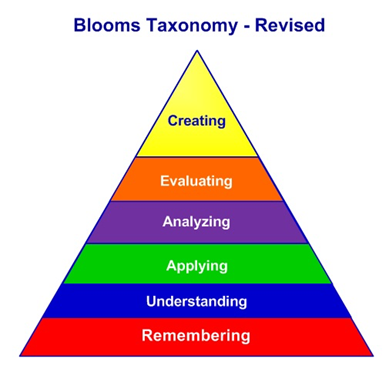
Children know.  They know their teachers who light them up on a frequent or daily basis versus their teachers who turn on the classroom lights and say, “Take out your books”.   A teacher who lights up children is a pathfinder to deeper learning.  Their insights into curriculum and pedagogy are 3D.  They know the sequence of facts and ideas and skills children need to learn to climb Bloom’s Taxonomy of Learning Objectives, but they don’t stop at Remembering and Understanding.  They push harder with “Tell me more, explain that in your own words, how is it similar to and different than”.  Their students are used to the “so what and now what can you do with this” questions.

I marvel at the fact that gifted teachers, real game changers, don’t know who they are.  They just are.  They are unconscious of the ways they teach and relate to children. 

I am told that mathematics is the creation and use of elegant solutions to explain our world.  Simplicity and insightful are words that few strugglers with trigonometry, like me, understand.  Yet, I watch gifted math teachers help children to patiently unravel a math problem into understandable questions in their native language.  Gifted math teachers teach students to see the math question within the forest of words and digits on the page.  Insight is understanding what one is being asked to learn and the ability to state it in simple terms.  These teachers see problems, not just mathematical problems, differently and they teach children to see and think differently.  It is a gift.

My favorite band teacher is just a boy in man’s clothing playing his horn.  When he wears a tuxedo and waves his baton, his bands make wonderful music.  He is best, however, when he sits beside a child and together, they model and practice, model and practice, model and practice.  He slowly builds musical skills and the ability to read and interpret musical scores until children fit into an ensemble of players and then he gives them more difficult pieces to play.  He personalizes and perseveres and never quits on the individuals who are his band.  He grows musicians through patient and skillful instruction.  It is a gift.

“So what?” and “what do you mean by that” are the kinds of questions that cause many children to hunker down behind the child sitting in front of them hoping not to be called on.  Lots of hands go up when a teacher asks questions about facts; not so many when the questions require deeper inquiry.  A love of intellectual inquiry tolerates children who are reluctant to share and whose sharing contains inaccuracies.  Gifted inquirers know that these can be teased out and corrected.  It is the chase for understanding and reasoning they pursue.  Gifted teachers also know that children can learn in the periphery and listening to how one child sews together a reasoned response helps others with their own.  A gifted inquirer will smile and applaud louder for the unexpected yet slowly developed thinking of a reluctant sharer more than for the quick and always on point response of another child.  Chasing a well-reasoned and thoughtful response is a gift.

Some children come to school to learn to read, others to play an instrument, and others for the joys of recess and athletics.  Every child should have their own “go to” place in school.  I smile now thinking of an art teacher whose empathy for children caused him to seek out all children who had not found their school place.  He caused them to be artists and then to be proud of their artistry.  I remember him in his layers of baggy clothing and Birkenstocks helping a student with charcoal find depth through shading and a student at a potter’s wheel find the feel for drawing a vase out of a lump of clay.  It is easier to teach children who have a sense of who they are; it is more difficult to teach children who are lost in themselves.  His gift was in turning on the lights within wandering children.

Every child is different with a combination of admirable qualities and some things that cause us to shake our heads.  I watched a gifted science teacher who never shook his head because he focused on admirable qualities.  His teacher’s affect was as inviting as new snow and his expectations for student learning were as elevated as snow capped mountains.  It did not take students long into a new school year to know that his reputation was real.  He accepted who they were, found their strengths, and every day helped each child to build their understanding of Biology and AP Biology and computer science.  He was never in a hurry but, with his patience, caused all students to engage and learn.  Like Mr. Rogers of TV fame, he built students up and, in that building, taught them.  It is a gift.

Indelible effects that last a lifetime.

At their 50th reunions, alums invariably share stories about their school experiences and the teachers who taught them.  The passage of time has a way of rounding corners and evening out the particulars alums remember.  It is difficult to assign causation between a student’s schooling and their life at the age of 70.  However, the language and the tones change when alums talk of an exceptional teacher whose insight, perseverance, effectiveness of intellectual inquiry, empathy, or friendship made such an indelible imprint that it lasted 50 or more years.  The ability to cause such lifelong effects is a gift.

Esprit de Corps Elevates Teacher Capacity to Cause All Children to Learn

Noble purpose and fraternity.  These are two aged concepts, yet they are the time-tested bonds uniting a band of people committed to a cause and to each other that allows them to move the proverbial mountain while others around them shovel gravel.  They are words that, if you must speak or define them to others, place the listener outside the circle of understanding of the power and force of esprit de corps

Esprit de corps is real.

What is it that causes collaborative work to reach a recognized higher plane of excellence?  As a French language term, esprit de corps is associated with both fictional and real-life manifestations.  We conjure D’Artagnan and the three musketeers yelling “One for All and All for One” and charging the guards of Cardinal Richelieu in the Alexander Dumas novel.  We hear the Marine Corps motto of Semper Fidelis (Always Faithful) and remember actual stories of courage in battle that are part of American lore.  Beyond Musketeers and Marines, how does esprit de corps apply to the work of teachers in a public school?  Or does it not?  I believe it does.

Esprit de corps cannot be manufactured.

We too often believe that teamwork and team management are the same as esprit de corps.  They are not.  I do not dis the value of teamwork.  Teaming adds the values of group membership, agreed upon group goals, concerted collegial work effort, and team recognition.  We form teams readily for our recreational activities, sports, and non-sports.  We team for organizational fund raising.  We team for a great number of spontaneous reasons – almost like crowdfunding – that draw us together for a short-lived purpose.

Organizational gurus work the circuit of conferences and book signings touting their recipes for increasing TEAM.  A common plan for increasing organization teamwork looks like this.

#1 – Know and communicate your clear WHY?

#2 – Create and communicate your value system

#3 – Live by your own values

#4 – Create a common aim

#5 – Hold a siege

#6 – Be aspirational

#7 – Celebrate

# 8 – Eat together

#9 – Communicate with passion

https://www.linkedin.com/pulse/nine-secrets-creating-culture-esprit-de-corps-within-your-brown

If real esprit de corps can be artificially manufactured in this way, why then do we keep talking about low employee morale and trying to find the next magic bullet that will align employees to employment purposes?  Why do we look for the next guru and keep attending the next conference?  Because true esprit de corps is not manufactured, it is birthed and continuously nurtured.

Teaching as a calling.

When interviewing teacher candidates, I often ask “Is teaching your calling?”  “Calling” is another of those seemingly antiquated concepts, yet it is a feeler question to discern those who understand what it is to be innately drawn to a purpose greater than employment.  It exposes a teacher’s intrinsic motivations to teach.  The “called” are passionate about teaching.  A candidate who understands the question typically hesitates to ensure she heard the question correctly and then explains how her itch to teach cannot be satisfied with scratching – she needs to teach to fulfill her greater needs.  This is not to say that all teachers must feel the calling to be successful teachers; they do not.  There are many teachers who cause children to learn and consider teaching their job not their passion.  An intrinsic passion to the noble purpose of teaching is a fire that burns brighter in the called and pushes them to do more than their job without questioning why.

Fraternity + passion = esprit de corps

Add fraternity to passion and the seed of esprit de corps is born.  The fraternity may begin with two teachers with similar assignments seeing themselves not as individual teachers in separate classrooms but as partners in the same assignment.  Collaboration and mutuality build fraternity.  Sharing concerns, combined problem-solving, and the enjoyments of success based upon passionate commitment build fraternity.  Fraternity often begins with the tangibles of friendship and grows to the intangibles of brother- or sisterhood. 

Cadre building is a contributor to nurturing esprit de corps.  Strong cadres form themselves when individuals identify their common cause.  Cadres can be differentiated from spontaneous or assigned teams by the bonds of their fraternity.  Perhaps, a cadre is a super team, a team that exceeds teaming because its members are bonded with esprit de corps.  Building a cadre of impassioned teachers is easy – you just give the time and opportunity and this key question – “what should we do?” – then let them go. 

Some argue that cadre building begets favoritism and the separation of faculty into factions.  I argue that every organization that achieves significant purposes over time contains a cadre or cadres of impassioned persons at its core.  Nurtured by institutional goals, cadres of impassioned persons are the heart of esprit de corps.  Consider the school organizations that are recognized as high performing, elite, exemplary – you choose the word meaning extraordinary – and you will find esprit de corps, cadre strength, and impassioned work at its core.

Leadership nurtures esprit de corps then gets out of the way.

If esprit de corps can be a powerful force in schools, why doesn’t it exist everywhere?  Simply stated, esprit de corps flourishes where school leadership also is driven by noble purpose and fraternity, understands its dynamics, and gives these time, resources, and opportunity to work.  Although it seems that leadership sublimates the cadre, it does not – leadership nurtures cadre work, including giving earned and appropriate internal and external recognitions.  Cadre work can outgrow the apparent work of leadership, and this is the pivot point at which leaders and cadre collegial extend their excellence or leadership extinguishes the cadre.  It is a control issue.  Nothing kills esprit de corps more than the artificial controls of leadership operating for other purposes.

Too often leadership and their cultural design cause teachers to become independent contractors working in isolation in closed-door classrooms.  This is a real phenomenon in school historically and today.  It is too easy when this condition exists to do nothing and allow education to sink into mediocrity.

Every period of excellent in student outcomes is associated with teacher esprit de corps.

In hindsight, we can identify many schools that enjoyed a “golden era” of student successes.  Peel back the layers and you will find an esprit de corps that flourished with enlightened leadership and a band of teachers whose passion and fraternal instincts caused them to excel in the noble purpose of teaching.

Classroom Interactions Are Soccer Touches – Quality Touches Create Scoring Opportunities

(This is a reposting from December 14, 2018. I repost this because the ability to create quality teacher and student interactions is needed even more today in 2024 post-pandemic schooling.)

“How many touches did you have?”

“How many were quality touches?”

“And, what did you do with your quality touches?”

I listen to kid-talk about their soccer game. I did not play soccer, so I am learning by watching and listening. A touch is a player getting a foot to touch the ball for a pass, shot, dribble, trap or tackle. I have learned that a tackle in soccer is not a tackle in football. Everything in soccer revolves around touches. Touch the ball and make good things happen.

The kid-talk is genuine. They are very candid in declaring or describing a good touch and in explaining how a touch failed. Interestingly, they talk about the importance of seeing ahead – how their preparation for a touch needs to be viewed by the next two or three touches to follow. Few touches immediately result in a score, but a quality touch in a sequence of quality touches can lead to a score or keep an opponent from scoring.

The same questions can be asked about what happens in a classroom at school. Causing learning is all about touches, of a different yet similar kind.

“How may interactions did a teacher have with a student?”

“How many of these were quality interactions?”

“And, what did the teacher and student do with their quality interactions?”

Like watching soccer, I visit classrooms to watch and listen for how a teacher causes each child in class to learn in that specific period of instruction. Unlike my viewing of soccer, I know what quality touches or interactions in a classroom look, sound and feel like. I look for a teacher’s intentional touches.

  • Questions or statements a teacher directs at the class or at a particular group of students to cause them to think and respond, to apply a problem resolution and share their solution with classmates, and to ask questions or make statements to set up the next questions.
  • Questions asked of a specific student to elicit a specific response.
  • Kicked questions that use one student’s response to seek agreement or disagreement from another student or to ask for add-on thinking from successive students.
  • Questions that are not to be answered immediately, but after more information and thinking have been exposed.
  • Questions that expose students’ readiness for the next teaching.

I listen for student questions and statements that expose what they know and can do with confidence, what they are unsure of, and what is just plain misunderstood. And, I listen for the teacher’s responses, the touches that reinforce, build confidence, clarify and correct. This type of interaction is essential. If there is a strong sense of teamwork between students and their teacher, I expect to hear these touches all the time. If there is no trust between students and their teacher, students will not risk exposing their uncertainties.

The sociometrics of classroom interactions are fascinating and telling. When the interactions ping-pong around between teacher and students, kids are scoring all the time. When the interactions are stilted, contrived, unidirectional, and closed, there is little scoring. Students just wait for the quiz or test without confidence that every student is able to share in a good score.

Interactions can be questions, as shown above. Interactions can be visual looks of support and reinforcement, quizzical looks that ask a question without words, a physical proximity that says “I care”, a kneeling down next to a child’s chair to make a conversation private, and a smile to say “well done.” A tally of the interactions between a teacher and all the students in a class rises to the thousands every day. How many are quality interactions?

For teachers, the ability to make quality interactions is a learned and acquired skill set. It is intentional within a teaching and learning design. It is mentally rehearsed. It is practiced often enough that students will risk their engagement. Good interactions beget more good interactions. Quality interactions are the heart and soul of good teaching.

Every now and then, I hear teacher-talk that sounds like kid-talk about their soccer game, talking about how well a teaching episode felt as a result of quality interactions. Teachers know all about quality and no-quality touches with students.  The task is increase the number of quality, diminish the number of no-quality, and improve the likelihood of student scoring.  Goal!!!!!!